

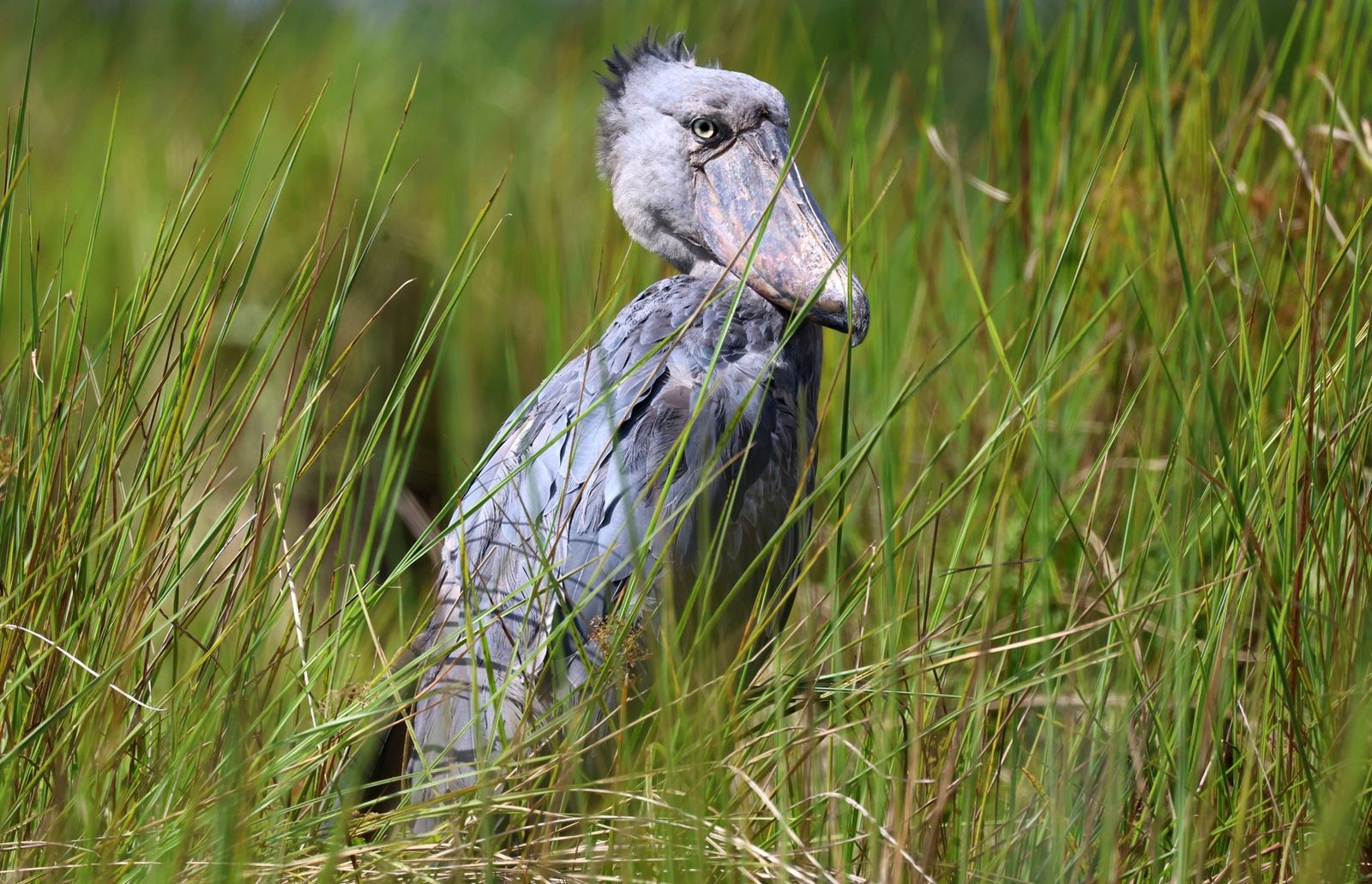
The shoebill looks like something from the age of the dinosaurs: a tall, grey, motionless bird with a huge, shoe-shaped bill and a stare that seems to follow your canoe. For many birders it is the single most wanted bird in Africa, and Uganda is one of the best places in the world to see it.
What is a shoebill?
The shoebill is a large wading bird that lives in the papyrus swamps of central and eastern Africa. It stands more than a metre tall, hunts patiently by standing almost still in shallow water, and then strikes quickly at lungfish and other prey. Although shoebills are rare and sensitive to disturbance, they are present in Uganda throughout the year, which is why a canoe trip into the right wetland has a good chance of success.
Mabamba Swamp: the easiest place to look
Mabamba Bay Wetland lies on the shore of Lake Victoria, about an hour's drive from Entebbe airport. It is a protected wetland of channels, open water and papyrus, and local guides know where the birds tend to stand on any given morning. You travel by motorised canoe through narrow channels, and your guide watches for the grey shape among the papyrus.
Because it is so close to Entebbe, Mabamba fits neatly into the first or last day of a safari, when many travellers have a free morning around their flight.
Other places to see shoebills
- The Nile delta in Murchison Falls National Park. Boat trips towards the delta of the Victoria Nile, where it enters Lake Albert, are a well-known shoebill area and can be combined with a Murchison Falls safari.
- Other Lake Victoria and Lake Kyoga wetlands. Sightings happen in other swamps, but access and guiding are less organised than at Mabamba.
The best time of day
Start early. In the cool of the morning the birds are active, the light is soft for photographs and the water is calm. Most guides recommend leaving Entebbe or Kampala before dawn so that you are on the water soon after sunrise.
What else you will see
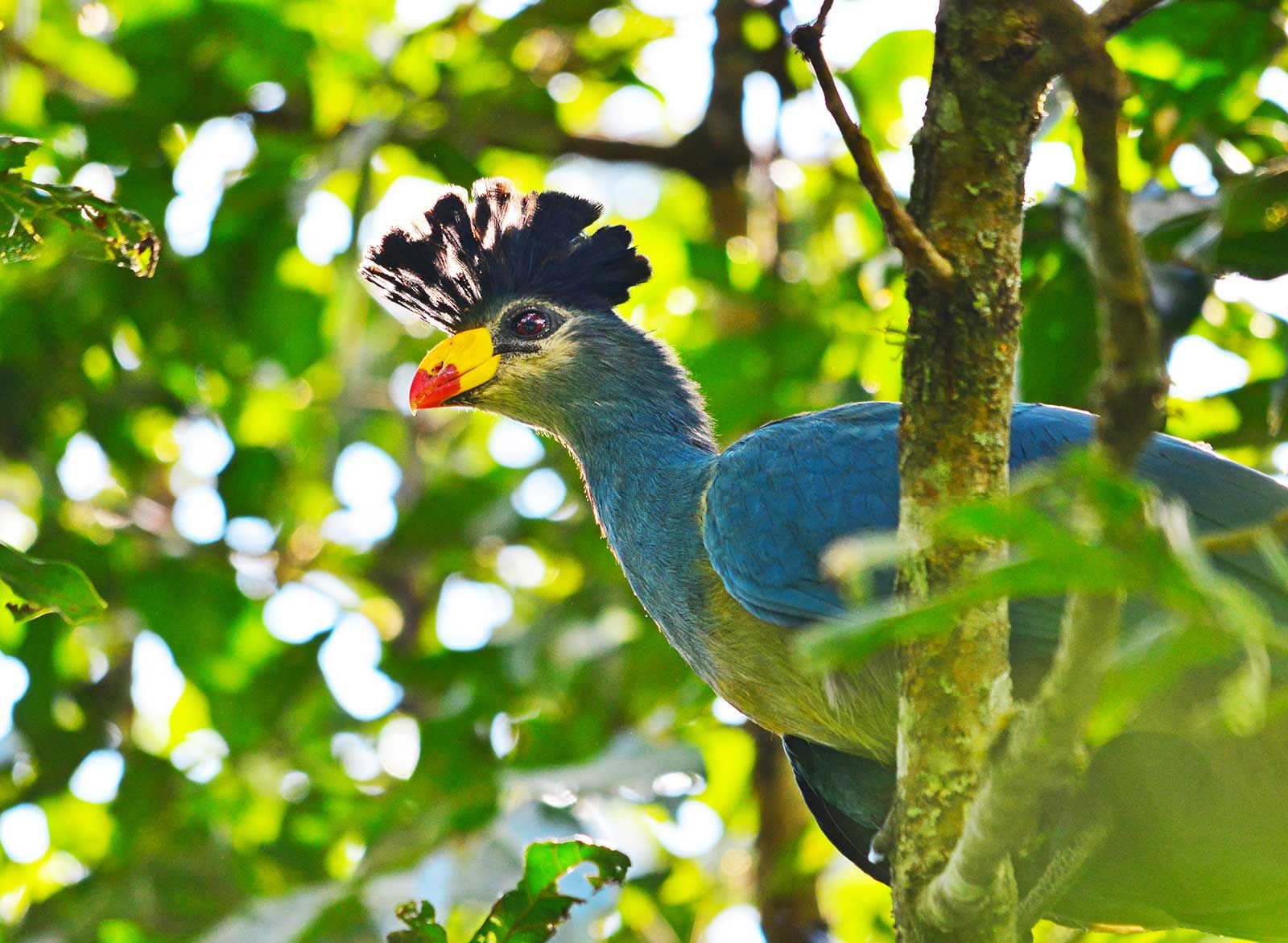
A morning in a papyrus swamp is also a good general birding trip. Depending on the season you may see African jacanas walking on lily pads, purple swamphens, several kingfishers, herons and egrets, and the papyrus-loving gonolek. Your guide will also point out smaller specialities of the swamp.
What to bring
- Binoculars and a camera with a long lens (a 300 mm lens is a good minimum)
- A hat, sunscreen and sunglasses: there is little shade on the water
- Water-resistant shoes that can get wet, and a light rain jacket
- Insect repellent
- A dry bag or plastic bags to protect your equipment
Respecting the birds
Shoebills are shy. Good guides keep the canoe at a distance, switch off the engine near the bird, and never chase it. Staying quiet and remaining seated in the canoe protects the bird and the sighting for everyone.
Making it part of your trip
Add Mabamba to your arrival or departure day, or combine it with a longer birding trip across Uganda's forests and savannah. We build the timing around your flights, so you are never rushing to the airport.
Common questions
Is a sighting guaranteed?
No wild animal can be guaranteed, but the chance of seeing a shoebill at Mabamba on a morning trip is good, and your guide will make the most of the time on the water.
How long does the trip take?
Allow a full morning: the drive from Entebbe, two to three hours on the water, and the return.
Do I need to be an experienced birder?
Not at all. The shoebill is a rewarding bird for beginners and specialists alike.
Ready To Plan Your Trip?
Tell us your dates and interests and a trip specialist will reply within one business day.
Plan My Trip