
Jinja, where the White Nile leaves Lake Victoria, is East Africa's adventure capital, and rafting here is the activity that most first-time visitors remember longest. If the words "Grade 5" make you nervous, this guide explains what actually happens on the river.
What does Grade 5 mean?
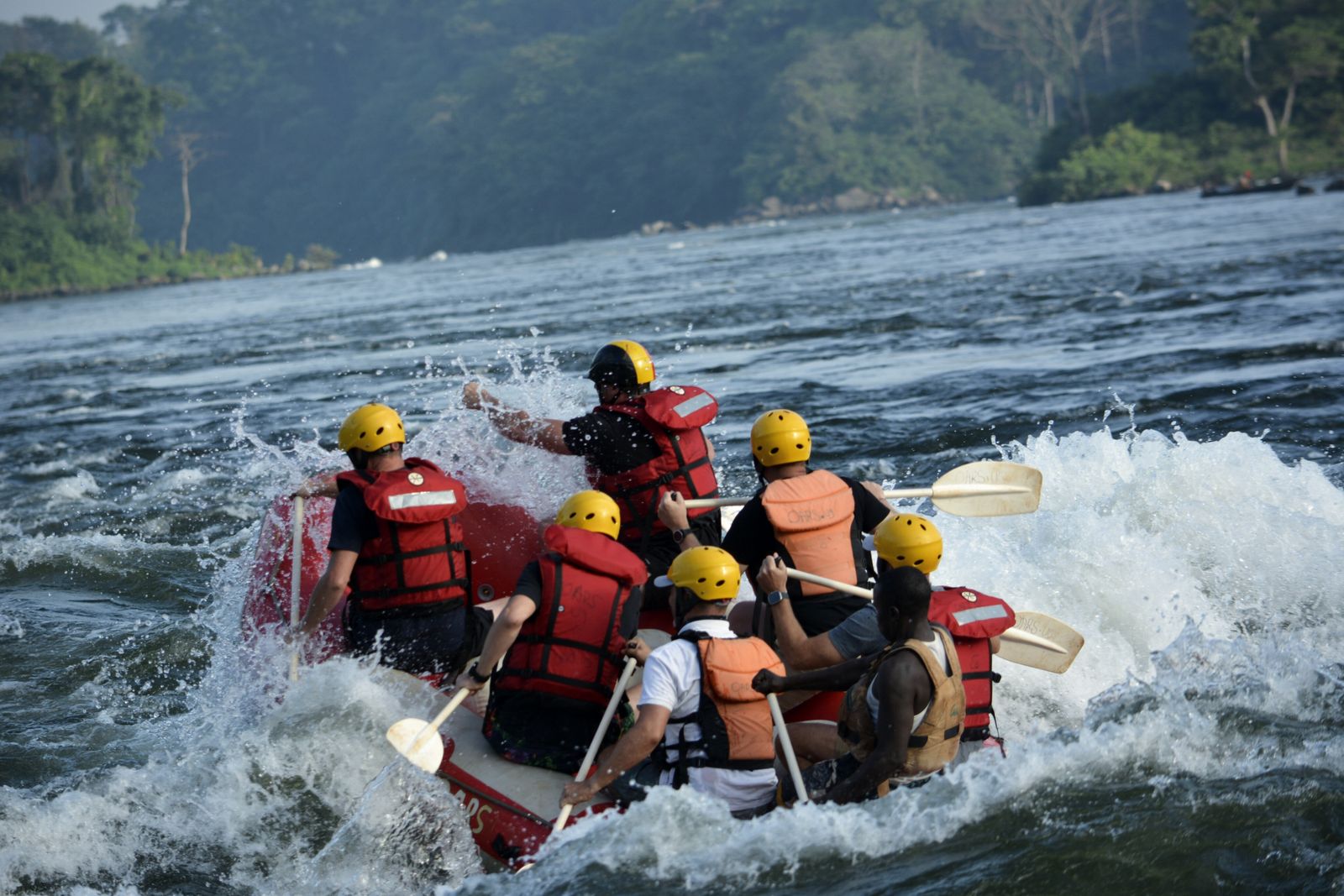
Rapids are rated from Grade 1 (gentle moving water) to Grade 6 (generally considered unrunnable). Grade 5 describes powerful, long, technical rapids with big waves and strong currents. A full day of rafting on the Nile includes several of the biggest rapids, but it is guided by experienced river crews and you also float through calm stretches between them.
How the day works
- Arrival and registration. You sign a waiver and are fitted with a life jacket and helmet.
- Safety briefing. Your guide explains the paddle commands, how to sit in the raft, what to do if you fall out, and how to hold the rescue line.
- Practice on calm water. The group learns to paddle together before the first rapid.
- The rapids. Between rapids you float in calm water, swim in the river if you wish, and the crew explains the next section.
- Lunch on the river bank on a full-day trip, then more rapids in the afternoon.
Safety
- Every raft has an experienced guide, and safety kayakers travel with the group to help anyone who falls out.
- Life jackets and helmets are compulsory.
- Capsizing happens and is part of the fun. If you fall out, keep your feet up and wait for your guide's instructions.
- Operators set their own minimum age and conditions, so tell us about children, health issues and swimming ability when you book.
Do I need to be fit or a swimmer?
You do not need to be a strong swimmer, because you wear a life jacket, but you should be comfortable in and around water. Basic fitness is enough. If you are cautious, ask for the half-day option or a route that skips the biggest rapids.
What to wear and bring
- Swimwear or quick-dry shorts and a quick-dry top
- Strapped sandals or old trainers (flip-flops come off in the river)
- Sunscreen and a hat or sunglasses with a strap
- A towel and dry clothes for afterwards
- Leave valuables in the vehicle; the operator will normally take photographs for you
When to go
You can raft in Jinja all year. The drier months, roughly December to February and June to September, bring warmer weather and more stable conditions, while the wetter months make the river fuller.
More to do in Jinja
Besides rafting you can go kayaking, take a boat trip to the source of the Nile, try bungee jumping, quad biking or horse riding, or simply relax on a riverside terrace. Many guests add a night or two in Jinja at the end of a gorilla and wildlife safari.
Planning tip
Do your rafting at the end of a safari, not before a gorilla trek, so that sore muscles do not meet a day of hiking in the forest. We often place Jinja between the parks and the flight home.
Common questions
Will I definitely fall out of the raft?
Not definitely, but it is quite likely on a full day. Your guide and the safety kayakers are there to pick you up.
Can I bring a camera?
A waterproof action camera strapped to a helmet is popular. Otherwise rely on the operator's photographers.
How long does a rafting trip take?
A half-day trip takes about half a day including transfers, and a full-day trip lasts most of the day with lunch included.
Ready To Plan Your Trip?
Tell us your dates and interests and a trip specialist will reply within one business day.
Plan My Trip